
Natural Rubber vs Synthetic Tape Adhesive
Natural rubber vs synthetic rubber, hot-melt and acrylic tape adhesives compared: grip, heat, clean removal and the right adhesive for each job.
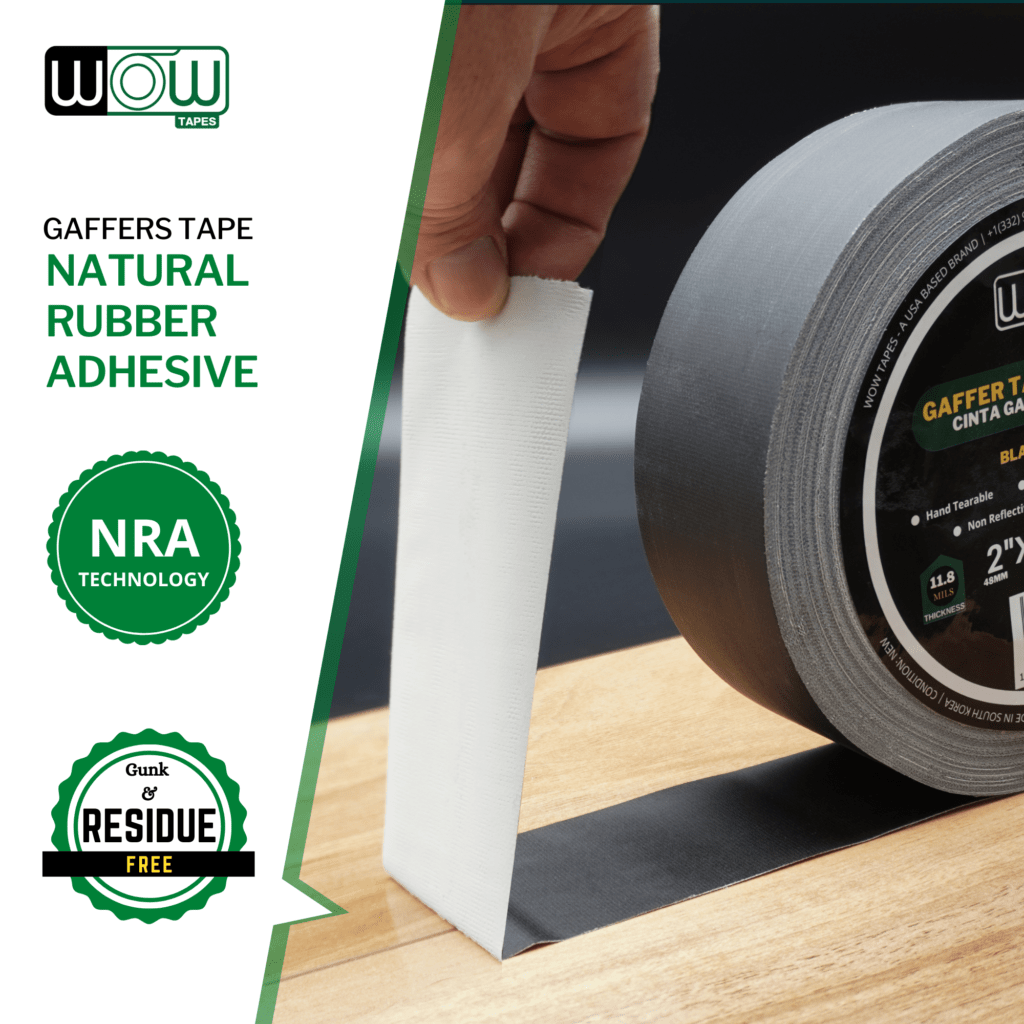
Short answer: Natural rubber adhesive grips rough surfaces, stays flexible across a wide temperature range and releases cleanly, which is why it is the traditional choice for professional gaffer tape. Synthetic rubber and hot-melt adhesives cost less to make and stick fast, but they can soften under heat and leave residue. Acrylic adhesives suit long-term, outdoor and UV-exposed jobs rather than temporary ones.
When people compare tape, they usually look at the backing: cloth, plastic, paper, foil. But the backing only carries the adhesive. The adhesive decides how well tape grips, how it behaves in heat and cold, and whether it comes off clean. Two tapes with the same backing can perform completely differently because of what is on the sticky side.
The main types of tape adhesive
| Natural rubber | Synthetic rubber / hot-melt | Acrylic | |
|---|---|---|---|
| Initial grab | High | High | Lower at first, builds over time |
| Rough surfaces (carpet, concrete) | Very good | Good | Fair |
| Behavior in heat | Stays stable across a wide range | Can soften and ooze | Very stable |
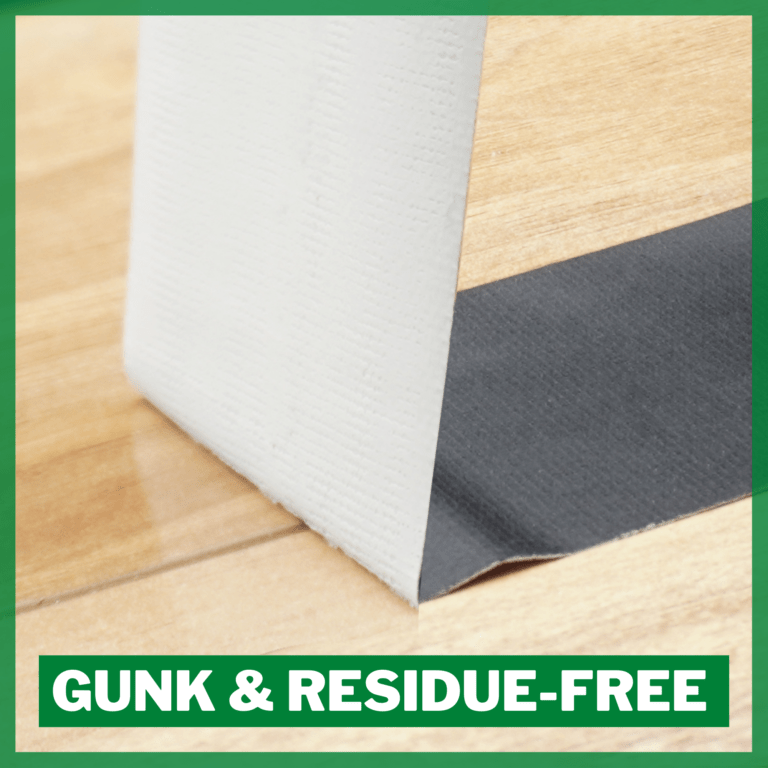
| Clean removal | Very good on most finished surfaces | Often leaves residue | Can be hard to remove after long periods |
| Long outdoor and UV exposure | Not ideal | Not ideal | Very good |
| Cost to make | Higher | Lower | Higher |
| Best for | Temporary, professional jobs | Low-cost general use | Long-term, permanent bonds |
Natural rubber adhesive (NRA)
Natural rubber adhesive is made from rubber that comes from rubber trees, blended with resins that control how sticky it is. It has a high initial grab, so it holds the moment you press it down. It is flexible, so it conforms to uneven surfaces like carpet, concrete and textured floors. And it is cohesive, which means the adhesive holds together and stays with the tape when you peel it off, instead of splitting and leaving a layer behind.
That combination is why natural rubber is the traditional adhesive for professional gaffer tape. It holds firmly through a long shoot or show, then lets go cleanly.
Where it is not the best fit: permanent outdoor applications with long sun exposure. For those, acrylic is usually better.
Synthetic rubber and hot-melt adhesives
Synthetic rubber adhesives are made from petroleum-based polymers. Many are applied as a hot-melt, which is fast and cheap to manufacture. They grab well and are common in packing tape, general-purpose tape and lower-cost “gaffer-style” tape.
The tradeoff shows up with heat and time. Under stage lights, in a hot truck or on sun-warmed floors, hot-melt adhesive can soften, slide and transfer onto the surface. That is the gray, sticky film crews end up scraping off. If you need help with that, see how to remove tape residue.
Acrylic adhesives
Acrylic adhesives resist UV light, aging and temperature extremes very well. They are often used for long-term mounting, outdoor labels and permanent bonds. They usually take time to reach full strength and can be harder to remove later, which makes them a poor fit for temporary jobs like taping cables to a floor.
How to tell what adhesive a tape uses
- Check the product specifications. Reputable brands state the adhesive type.
- Be cautious when the adhesive is not listed at all. That often means it is not natural rubber.
- Test it: leave a strip on a warm surface for a few hours, then peel. Softening, stringing or residue are signs of a hot-melt or low-grade synthetic adhesive.
Frequently asked questions
What is natural rubber adhesive tape?
It is tape that uses an adhesive made from natural rubber blended with tackifying resins. It grips rough surfaces, stays flexible and releases cleanly, which is why it is used on professional gaffer tape.
Is natural rubber adhesive better than synthetic?
For temporary jobs that need strong grip and clean removal, yes. For low-cost general use, synthetic adhesives are adequate. For long-term outdoor bonds, acrylic is usually the better choice.
Why does cheap tape leave residue?
Many low-cost tapes use hot-melt or synthetic adhesives that soften with heat and time. When the adhesive bonds more strongly to the surface than to the backing, it stays behind as residue.
What adhesive does Wow gaffer tape use?
Wow gaffer tape uses a natural rubber adhesive on a matte cloth backing, rated from -31°F to 176°F.
Bottom line
The adhesive is the part of the tape that does the work. For temporary professional jobs, natural rubber gives you strong grip and clean removal. Wow Tapes puts natural rubber adhesive on every gaffer roll at an everyday price. Read why we chose it or see the tape.
More gaffer tape guides
 Gaffer Tape for Photography Backdrops
How photographers use gaffer tape for seamless paper and fabric backdrops, stands, cables and position marks, plus which color to use and…
 How to Remove Tape Residue Without Damage
How to remove tape residue from floors, walls, glass, metal, plastic and cables without damage, plus why some tape leaves residue and…
 How to Label Moving Boxes and Cables
How to label moving boxes and cables so move-in is fast: what to write, where to put labels, room color codes, cable…