
How to Remove Tape Residue Without Damage
How to remove tape residue from floors, walls, glass, metal, plastic and cables without damage, plus why some tape leaves residue and how to avoid it.
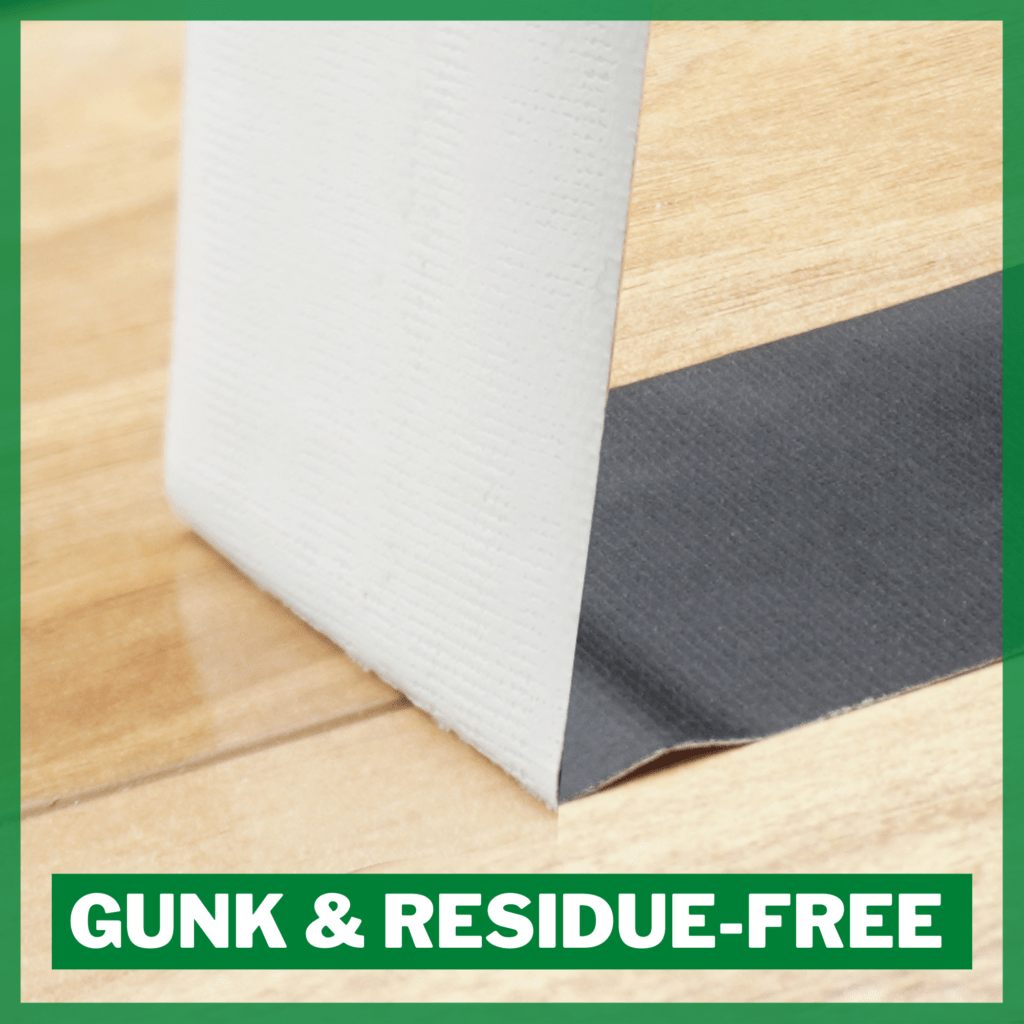
Short answer: Peel off what you can, then soften the leftover adhesive and wipe it away. On hard, sealed surfaces, isopropyl alcohol or a citrus-based adhesive remover works well. On sensitive finishes, start with warm soapy water and a little gentle heat from a hair dryer. Always test in a hidden spot first. The best fix is prevention: use a tape with an adhesive made to release cleanly.
Tape residue is the gray, sticky film that stays behind after cheap tape comes off. It grabs dust, looks terrible and, on rented floors and gear, can cost you a deposit. Here is how to remove it safely from the surfaces crews deal with most, and how to avoid it next time.
What you need
- A plastic scraper or old gift card (never metal on finished surfaces)
- Isopropyl alcohol (rubbing alcohol)
- A citrus-based adhesive remover
- Warm water and mild dish soap
- A hair dryer
- Microfiber cloths
Step by step
- Peel slowly at a low angle. Pull the tape back along itself, close to the surface, rather than straight up. This leaves less adhesive behind.
- Warm the residue. Point a hair dryer on low heat at the area for 20 to 30 seconds. Warm adhesive lets go more easily.
- Lift what you can. Roll the residue off with your thumb, or press a fresh piece of tape onto it and pull it away.
- Dissolve the rest. Dampen a cloth with the right cleaner for the surface (see the table below) and let it sit for a minute.
- Wipe and scrape gently. Use the cloth or a plastic scraper. Work in small sections.
- Clean the area. Wipe with warm soapy water, then dry, so no cleaner is left behind.
What to use on each surface
| Surface | Start with | Avoid |
|---|---|---|
| Sealed hardwood or laminate floors | Warm soapy water, then a little isopropyl alcohol on a cloth | Soaking the floor, harsh solvents, metal scrapers |
| Glass and mirrors | Isopropyl alcohol, plastic scraper | Abrasive pads |
| Metal (stands, cases, rigging) | Isopropyl alcohol or citrus remover | Wire brushes on painted metal |
| Hard plastic gear | Isopropyl alcohol, tested first | Acetone, which can melt some plastics |
| Painted walls | Warm water, gentle heat, light rubbing | Solvents and scrubbing, which can lift paint |
| Carpet | Citrus remover dabbed on, then blotted with soapy water | Rubbing hard, which spreads the residue |
| Cables and cords | Isopropyl alcohol on a cloth | Soaking connectors |
If a surface is antique, delicate, or not yours, test in a spot nobody will see. When in doubt, ask the venue or rental house what they prefer.
Why some tape leaves residue
Residue happens when the adhesive bonds to the surface more strongly than it bonds to the tape backing. Common causes:
- Low-cost adhesives. Hot-melt and some synthetic adhesives soften under heat and smear onto the surface.
- Heat. Stage lights, sun through windows and hot gear all soften adhesive.
- Time. The longer tape stays on, the more the adhesive flows into the surface.
- Wrong tape for the job. Duct tape and packing tape are not built for clean removal. See gaffer tape vs duct tape.
How to avoid residue next time
- Use gaffer tape with a natural rubber adhesive, which is made to release cleanly.
- Remove tape at the end of the job instead of leaving it for days.
- Keep tape away from direct heat where you can.
- For fresh paint, wallpaper or long installs, test a small piece first.
Frequently asked questions
What is the best way to remove tape residue?
Warm the residue with a hair dryer, lift what you can, then dissolve the rest with isopropyl alcohol or a citrus-based remover on a cloth. Finish with warm soapy water. Test the cleaner in a hidden spot first.
Does rubbing alcohol remove tape residue?
Yes. Isopropyl alcohol dissolves most tape adhesives on glass, metal and sealed surfaces. Test it first on plastics and finished wood.
How do I get tape residue off a wall without removing paint?
Use gentle heat and warm soapy water, and rub lightly with a soft cloth. Avoid solvents and scrubbing, which can lift or dull paint.
Does gaffer tape leave residue?
Good gaffer tape with a natural rubber adhesive comes off clean from most finished surfaces. Heat, time on the surface and delicate finishes can change results, so test first.
Related: renter-friendly uses for gaffer tape · renter-friendly uses for gaffer tape
Bottom line
Warm it, lift it, dissolve it, clean it. Then stop the problem at the source with tape that comes off clean. Wow gaffer tape uses a natural rubber adhesive on a matte cloth backing, in black and white.
More gaffer tape guides
 Gaffer Tape for Photography Backdrops
How photographers use gaffer tape for seamless paper and fabric backdrops, stands, cables and position marks, plus which color to use and…
 How to Label Moving Boxes and Cables
How to label moving boxes and cables so move-in is fast: what to write, where to put labels, room color codes, cable…
 Video Podcast Studio Setup: Cables and Marks
How to set up a clean home video podcast studio: hiding cables on camera, marking positions so every episode matches, backdrops, labels…