
How to Choose Gaffer Tape: A Buyer’s Checklist
How to choose gaffer tape that holds all day and peels off clean: adhesive, width, length, thickness, finish and price per yard.
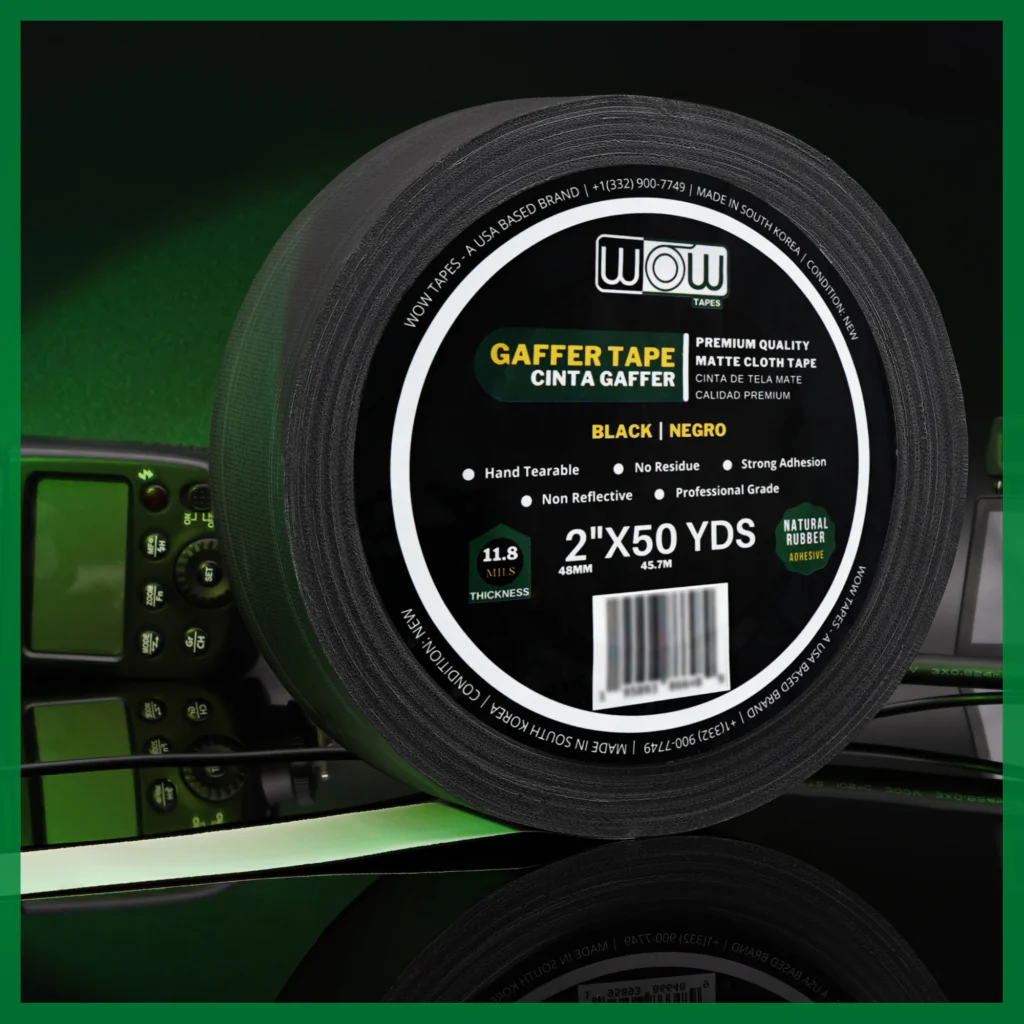
Short answer: Good gaffer tape has a cloth backing, a matte finish, a natural rubber adhesive and enough length per roll to get through a job. Check the adhesive first, because that decides whether the tape holds all day and whether it comes off clean. Then check width, length, thickness and price per yard, not price per roll.
Gaffer tape looks simple. A roll of black cloth tape. But two rolls that look the same on a shelf can behave very differently on set. One holds a cable run through a 12-hour shoot and peels off a rented floor clean. The other lifts at the edges by lunch and leaves a gray film that someone has to scrub off at wrap.
This guide walks through what actually separates professional gaffer tape from cheap look-alikes, so you can buy the right roll the first time.
- The adhesive matters more than anything else. Natural rubber gives strong grip and clean removal.
- 2 inches is the standard width for most crews. Wider is for cable runs on floors.
- Compare price per yard. A 50-yard roll is 67% more tape than a 30-yard roll.
- Real gaffer tape tears straight by hand and has a matte, non-reflective surface.
What is gaffer tape?
Gaffer tape (also called gaff tape or gaffer’s tape) is a cloth-backed tape made for temporary jobs. It is named after the gaffer, the head of the lighting department on a film set, whose crew uses it to secure cables, rig lights and make quick fixes. It is built to hold firmly, tear by hand, stay out of sight on camera and come off without damaging surfaces.
That last part is the whole point. If a tape leaves residue, it is not doing the job gaffer tape is meant for.
The 6 things to check before you buy
1. Adhesive type
This is the most important spec and the one most often left off the label. Professional gaffer tape traditionally uses a natural rubber adhesive. It grips rough surfaces like carpet and concrete, stays flexible in heat and cold, and releases cleanly from most finished surfaces.
Many low-cost tapes use synthetic rubber or hot-melt adhesive because it is cheaper to make. These can soften under hot lights and leave a sticky film behind. If a listing does not say what the adhesive is, assume it is not natural rubber. Our guide to natural rubber vs synthetic adhesive explains the difference in detail.
2. Width
| Width | Best for |
|---|---|
| 1 in | Labeling, marking small areas, securing thin cables |
| 2 in | The all-round standard: cable runs, rigging, quick fixes, backdrops |
| 3 to 4 in | Covering wide cable runs across walkways and floors |
If you only stock one width, make it 2 inches. It covers most jobs and tears neatly into narrower strips when you need them.
3. Length per roll
Roll length varies a lot between brands, and it is easy to miss. Many budget rolls hold 30 yards. A 50-yard roll holds 67% more tape, which means fewer roll changes mid-job and a lower cost per yard. Always check the yardage, not just the price.
4. Thickness and strength
Thicker tape is more durable and resists tearing when you do not want it to. Around 11 to 12 mil is typical for professional gaffer tape. Tensile strength tells you how much pull the tape can take before it breaks. For reference, Wow gaffer tape is 11.8 mil thick with a tensile strength of 36 lb/in.
5. Finish and hand tearing
Gaffer tape should have a matte, non-reflective surface so it does not catch light on camera or on stage. It should also tear straight across by hand. If you need scissors, or the tape stretches and frays before it tears, it will slow your crew down.
6. Color
Black is the default because it disappears in shadow and on camera. White is easier to see and to write on, so it is better for labels and marks. See black vs white gaffer tape for which to stock.
How to compare price fairly
Divide the price by the total yards, not the number of rolls. A cheap 30-yard roll can cost more per yard than a 50-yard roll that looks more expensive. Then factor in the hidden cost of residue: time spent cleaning floors, gear and walls after the job.
Quick test for a new roll
- Tear a strip by hand. It should tear straight, without stretching.
- Stick it to the surface you use most, such as a floor, a light stand or a painted wall.
- Leave it for the length of a typical job.
- Peel it off slowly at a low angle. Check for residue and any lifted paint or finish.
Frequently asked questions
What is the difference between gaffer tape and duct tape?
Gaffer tape has a matte cloth backing and an adhesive made to come off clean. Duct tape has a shiny plastic-coated backing and an aggressive adhesive that usually leaves residue. Use gaffer tape for anything temporary.
What width of gaffer tape is most common?
2 inches is the most common width. It handles cable runs, rigging and general fixes, and it tears into narrower strips when needed.
Does gaffer tape leave residue?
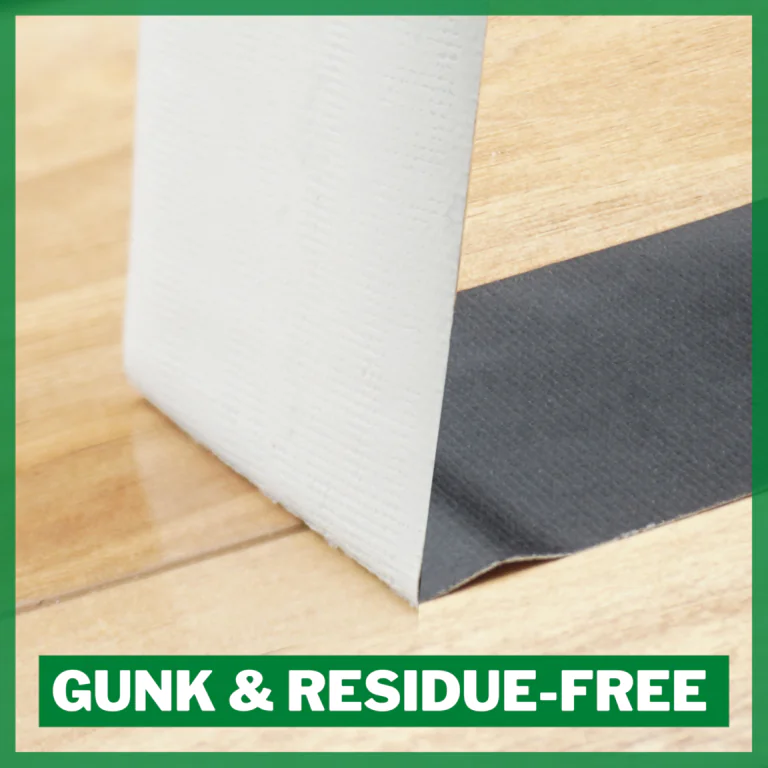
Good gaffer tape with a natural rubber adhesive comes off clean from most finished surfaces. Results depend on the surface, heat and how long the tape stays on, so test delicate finishes first.
How long is a roll of gaffer tape?
It varies by brand. Many rolls are 30 yards, while professional rolls are often 50 yards or more. Wow gaffer tape is 50 yards (150 feet) per roll.
Related: gaffer vs spike vs console tape · how to tape cables to carpet safely
Bottom line
Start with the adhesive, then check yardage and price per yard. A natural rubber gaffer tape that comes off clean saves more time than it costs. If you want a roll that checks every box, see Wow gaffer tape in black and white, 2 in x 50 yd.
More gaffer tape guides
 Gaffer Tape for Photography Backdrops
How photographers use gaffer tape for seamless paper and fabric backdrops, stands, cables and position marks, plus which color to use and…
 How to Remove Tape Residue Without Damage
How to remove tape residue from floors, walls, glass, metal, plastic and cables without damage, plus why some tape leaves residue and…
 How to Label Moving Boxes and Cables
How to label moving boxes and cables so move-in is fast: what to write, where to put labels, room color codes, cable…